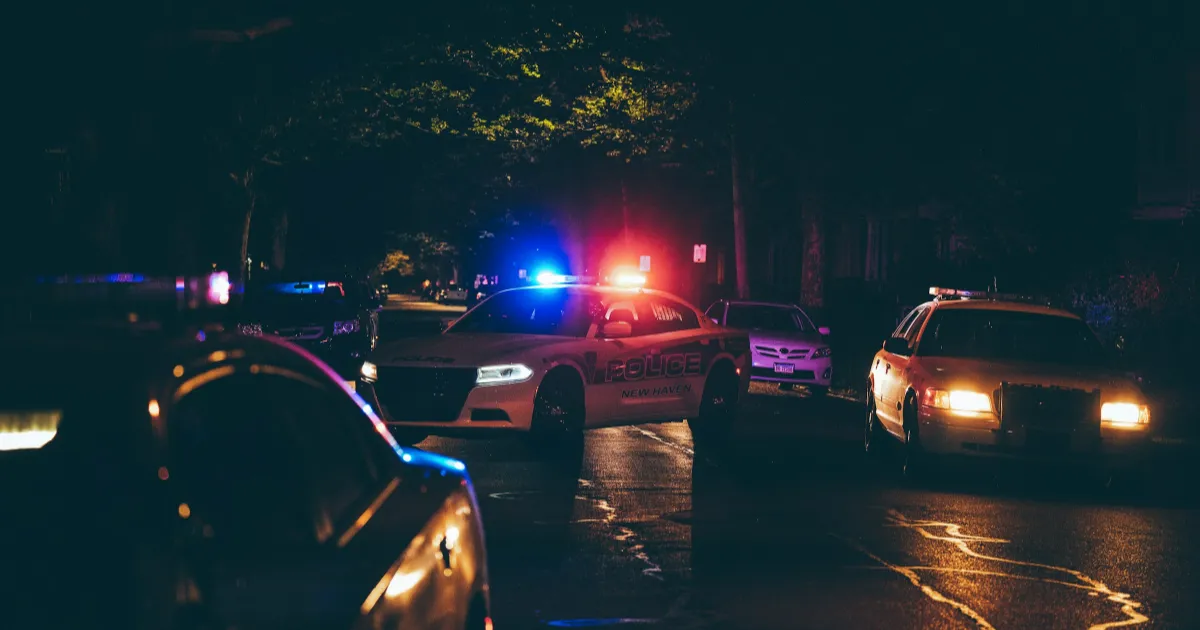
If an officer suspects you of drunk driving in Missouri, you will likely be asked to step out and do a few roadside tests. Most drivers do not know what the officer is looking for. Knowing how the standard field sobriety tests work helps you understand your police report and spot weak points in the case.
Quick answer: Missouri officers use the three standard field sobriety tests developed by the National Highway Traffic Safety Administration (NHTSA). They are the horizontal gaze nystagmus (eye) test, the walk-and-turn test and the one-leg stand test. Each test has a fixed set of “clues” that officers score. Many officers also ask for a portable breath test at the roadside, which is a separate screening tool. The tests are voluntary, unlike the chemical test covered by Missouri’s implied consent law, RSMo 577.020.
What are the three standard field sobriety tests?
The standard field sobriety tests are a three-test battery that NHTSA built and validated for traffic stops. Officers in Missouri train on the NHTSA manual, and each test has its own clues and “decision point.” A decision point is the number of clues that NHTSA says suggests a blood alcohol level of 0.08 or higher.
Horizontal gaze nystagmus (HGN)
The officer moves a pen or penlight side to side and watches your eyes follow it. Nystagmus is an involuntary jerking of the eye, and alcohol can make it show up sooner and stronger. The officer checks each eye for three clues:
- Lack of smooth pursuit as the eye follows the object
- Distinct and sustained jerking when the eye is held at the far side
- Jerking that starts before the eye reaches 45 degrees
That makes six possible clues. NHTSA’s decision point is four or more.
Walk-and-turn
You stand heel-to-toe on a real or imaginary line while the officer gives instructions. Then you take nine heel-to-toe steps, turn in a set way and take nine steps back. The officer scores eight clues:
- Losing balance during the instructions
- Starting too soon
- Stopping while walking
- Missing heel-to-toe
- Stepping off the line
- Using arms for balance
- Making an improper turn
- Taking the wrong number of steps
NHTSA’s decision point is two or more clues.
One-leg stand
You raise one foot about six inches off the ground and count out loud (“one thousand one, one thousand two”) until told to stop. The officer times the test for 30 seconds and scores four clues:
- Swaying while balancing
- Using arms for balance
- Hopping
- Putting the foot down
NHTSA’s decision point is two or more clues.
Do you have to take field sobriety tests in Missouri?
No. Missouri’s implied consent law, RSMo 577.020, covers chemical tests of breath, blood, saliva or urine. It does not require you to do roadside balance or eye tests.
That difference matters. Refusing a chemical test after arrest triggers a license revocation under Missouri implied consent law. Saying no to field sobriety tests does not carry that penalty, but the officer can still arrest you based on driving, odor, speech or other signs.
The same statute also lets police record field sobriety tests on video, and that video can be used in court. For what to say and what happens next, read our guide on whether you can refuse a field sobriety test in Missouri and our post on refusing a breathalyzer.
How accurate are field sobriety tests, and how are they challenged?
The standard field sobriety tests are screening tools, not a measure of your blood alcohol level. Their value depends on how the officer set up, explained and scored each test.
What NHTSA’s own studies claim
NHTSA relies on a 1998 San Diego field study. Its training manual puts HGN at 88% accurate, walk-and-turn at 79% and one-leg stand at 83%. Used together, NHTSA reports a 91% correct arrest decision at the 0.08 level.
Read those numbers closely. They measure how well the tests predict a 0.08 reading, not whether a person could drive safely. They also mean some drivers under 0.08 still get scored as “failing.”
Conditions and physical limits
NHTSA’s manual calls for a reasonably dry, hard, level surface for the walk-and-turn. It says drivers in heels over two inches should get the chance to remove them. The original studies also found that people over 65, or with back, leg or inner-ear problems, had trouble with the test.
A good defense checks the video and report for the surface, footwear, lighting and any medical issues. It also asks whether the officer screened for those limits before starting.
Deviations from the manual
The NHTSA manual itself says that variations from ideal conditions may affect how much weight the results deserve. Common problems include rushed instructions, wrong timing, missed medical questions and HGN done while the driver sits in the car.
HGN in a Missouri courtroom
Missouri courts admit HGN results only after the State lays a foundation. In State v. Deweese (Mo. App. W.D. 2018), the court required proof that the officer was adequately trained and gave the test properly. The court also noted that a timely objection or motion to suppress is the way to raise these issues.
A stop that was illegal from the start can also knock out the test results; see our page on search and seizure. For more ways to attack the evidence, see our DWI defense strategies and our post on whether you can beat a DWI.
What other roadside tests might police use?
Officers sometimes add tests outside the standard battery, and a portable breath test is common too. Neither carries the same weight as the three standard field sobriety tests.
Non-standardized tests
Reciting the alphabet, counting backward, touching your finger to your nose or estimating 30 seconds are common extras. NHTSA’s manual describes the three standard tests as the only ones with validated clues. These extras have no NHTSA scoring system, which gives the defense room to question what they prove.
Portable breath test
Under RSMo 577.021, an officer may give a breath test at the roadside before arrest. That result can support probable cause to arrest and can be used in your favor. Subsection 3 of the statute is direct: the result “shall not be admissible as evidence of blood alcohol content.”
The portable breath test is not the breath test you take at the station after arrest. The station test is the one Missouri’s implied consent law covers, and its result can be used to prove your blood alcohol level.
The same subsection says the implied consent sections, 577.019 and 577.020, do not apply to the roadside test. So declining it is not the same as refusing the chemical test after arrest. In license cases, the Missouri Supreme Court held in Wilmoth v. Director of Revenue (Mo. banc 2023) that the roadside number can help show probable cause.
If drugs, not alcohol, are suspected, officers may run a longer evaluation at the station. Our post on driving while impaired by drugs covers those cases. Drivers under 21 face a lower 0.02 standard; see our page on underage DWI.
Frequently asked questions
What are the standard field sobriety tests?
The standard field sobriety tests are horizontal gaze nystagmus, walk-and-turn and one-leg stand. NHTSA developed them, and Missouri officers train on NHTSA’s manual.
Can I refuse field sobriety tests in Missouri?
Yes. Missouri’s implied consent law covers chemical tests, not roadside balance or eye tests, so there is no license penalty for declining them.
What happens if I fail field sobriety tests?
The officer will likely arrest you and ask for a breath or blood test. A “fail” is the officer’s opinion, and it can be challenged.
Can a medical condition affect the results?
Yes. NHTSA’s own manual notes trouble with the walk-and-turn for people over 65 or with back, leg or inner-ear problems. Tell your lawyer about any condition or injury.
Are field sobriety tests recorded?
Often. Missouri law allows police to video field sobriety tests, and dash or body camera footage can help or hurt the State’s case.
Is the roadside breath test the same as the one at the station?
No. The roadside test can support probable cause to arrest. Under RSMo 577.021, subsection 3, it is not admissible as evidence of your blood alcohol content.
Can I refuse the portable breath test in Missouri?
The roadside breath test falls outside Missouri’s implied consent sections, so the refusal penalties for the station test do not apply to it. The officer can still arrest you based on other evidence.
Arrested after standard field sobriety tests? Talk to a lawyer
Field sobriety tests are only as good as the officer who gave them. Brian J. Cooke is a St. Louis DWI lawyer who reviews the video, the report and the NHTSA rules line by line. If this is your first arrest, see our page on first-offense DWI and our checklist for what to do after a DWI arrest.
Call (314) 439-8501 or contact us online for a free consultation.
This article gives general information about Missouri law as of October 2026. It is not legal advice, and reading it does not create an attorney-client relationship.
View All Blogs