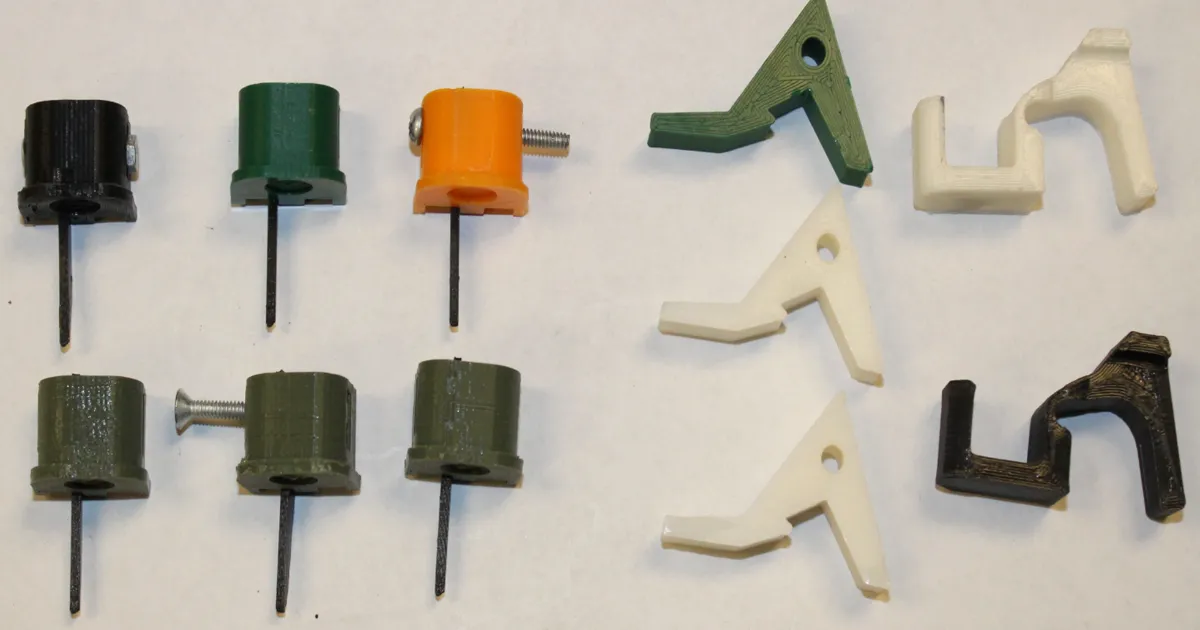
A Glock switch is a small part, often sold for $20 to $50 or 3D-printed at home. In court, however, prosecutors treat it like a machine gun. Glock switch charges in Missouri can bring a state felony, a federal felony, or both.
Police in St. Louis find these devices during traffic stops, searches and arrests. In addition, federal prosecutors here have said they will pursue these cases hard. If you were arrested with a switch, the next few weeks matter.
Quick answer: Under RSMo 571.020, possessing a machine gun in violation of federal law is a class D felony in Missouri, punishable by up to 7 years in prison. Moreover, federal law treats a switch as a machine gun even when it is not attached to a gun. Federal possession carries up to 10 years in prison under 18 U.S.C. 924(a)(2), and using one in a drug or violent crime triggers a 30-year mandatory minimum.
What is a Glock switch under Missouri and federal law?
A Glock switch, also called an auto sear or machine gun conversion device, makes a semi-automatic pistol fire automatically. For example, prosecutors and the ATF often call it an “MCD.”
Federal law defines a machine gun to include any part designed and intended only for converting a weapon into a machine gun. That language is in 26 U.S.C. 5845(b). So the switch itself counts as a machine gun, even in a drawer or a pocket with no gun nearby.
Missouri law has no separate “Glock switch” crime. Instead, RSMo 571.020 makes it a crime to knowingly possess a machine gun “in violation of federal law.” As a result, because federal law bans the device, the state charge follows.
Lawmakers filed bills in 2026 to name conversion devices in the state statute, including House Bill 2316. As of October 2026, the Revisor still shows the 571.020 text in effect since January 1, 2017.
What are the Missouri penalties for Glock switch charges?
In state court, prosecutors usually charge a switch case as unlawful possession of an illegal weapon under RSMo 571.020.1(6)(a). The statute makes it a class D felony.
| Penalty | Class D felony range | Statute |
|---|---|---|
| Prison | Up to 7 years | RSMo 558.011 |
| County jail instead | Up to 1 year, at the judge’s discretion | RSMo 558.011.2 |
| Fine | Up to $10,000 | RSMo 558.002 |
The statute reaches more than possession. For instance, it also covers knowingly making, transporting, repairing or selling a machine gun in violation of federal law.
Even after the sentence ends, a conviction leaves you with a felony record. Under federal law, a person convicted of a felony cannot legally possess any firearm or ammunition again.
What are the federal penalties for Glock switch charges?
In fact, federal charges are often the bigger risk. The U.S. Attorney’s Office for the Eastern District of Missouri regularly brings switch cases from St. Louis arrests.
Possession or transfer of a machine gun
18 U.S.C. 922(o) bans possessing or transferring a machine gun made after May 19, 1986. A violation carries up to 10 years in federal prison under 18 U.S.C. 924(a)(2). Prosecutors may add a separate count for an unregistered National Firearms Act weapon, which also carries up to 10 years under 26 U.S.C. 5871.
Also, each switch can be its own count. Similarly, selling switches can bring transfer and conspiracy charges on top of possession.
Using a switch in a drug or violent crime
The stakes jump if the switch is tied to drug trafficking or a crime of violence. Under 18 U.S.C. 924(c)(1)(B)(ii), possessing a machine gun in furtherance of one of those crimes brings a 30-year mandatory minimum.
That sentence must run consecutive to any other sentence, and probation is not allowed. A second 924(c) conviction involving a machine gun means mandatory life.
Prior felony convictions
If you already have a felony record, prosecutors can also charge felon in possession. Furthermore, that charge carries up to 15 years under 18 U.S.C. 924(a)(8).
What makes Glock switch charges in Missouri more serious?
The statutory maximum is only part of the picture. These facts tend to push a case toward federal court and a longer sentence:
- A prior felony record, or being on probation or parole at the time
- Drugs, cash or scales found with the gun
- More than one switch, or evidence of selling them
- An extended magazine or a loaded, switch-equipped gun in public
- Prior arrests involving a switch
For example, recent Eastern District of Missouri cases show the range. A felon caught with a switch-equipped Glock at a St. Louis hotel received 51 months. A man who sold one switch to an informant received two years. A man who sold seven conversion devices while on probation received 66 months.
What are the defenses to Glock switch charges in Missouri?
Of course, every case turns on its facts. These are the issues a defense lawyer looks at first.
Did you knowingly possess it?
Both the state and federal charges require proof that you knew about the device. Likewise, a gun found in a shared car or apartment does not prove it was yours. The U.S. Supreme Court held in Staples v. United States (1994) that the government must prove you knew the weapon had automatic characteristics.
Was the search legal?
Police find many switches during traffic stops and searches. If police lacked a legal basis for the stop or search, the evidence may be suppressed. Without the device, then, the case often falls apart.
Is it really a machine gun?
The government must prove the part was designed and intended to convert a weapon to automatic fire. Therefore, your lawyer should check the lab and ATF test results instead of assuming they are right.
State court or federal court?
Finally, where the case is charged can matter as much as the facts. Early work with prosecutors can sometimes keep a case in state court, where the range is lower and no mandatory minimum applies.
Our results in gun cases and Glock switch charges
The defenses above are not just theory. Here are a few recent outcomes from our case results:
- Glock switch charge dismissed. A St. Charles juvenile was charged with possessing a Glock equipped with a switch, plus a pound of marijuana and felony resisting. We showed other passengers were in the car and police could not prove who owned the gun. The judge denied adult certification, and the prosecutor dismissed the charges on the eve of trial.
- Jury acquits on unlawful possession of a firearm. Police said a stolen gun was in plain view between the driver’s seat and console of the car our client was in. At trial, the officers admitted they could not say he knew the gun was there, and the car was not his. The jury returned a quick not guilty verdict.
- Acquitted of trafficking and gun charges. A St. Louis man faced first-degree trafficking and several unlawful use of a weapon counts after police searched luggage. At a bench trial, an officer admitted he could not say who packed the bags. The judge acquitted on seven of nine counts, and our client received a suspended imposition of sentence on the rest.
Of course, every case is different. Past results do not guarantee a similar outcome in your case.
Frequently asked questions
Is it illegal to own a Glock switch in Missouri if it is not on a gun?
Yes. Federal law treats the switch itself as a machine gun. Therefore, possessing it alone can support Glock switch charges in Missouri and in federal court.
Can Glock switch charges be filed in both state and federal court?
Yes. The state and federal governments are separate sovereigns, so each can prosecute the same conduct. In practice, however, one usually takes the lead.
Can I register a Glock switch with the ATF?
No. Federal law bars private citizens from possessing machine guns made after May 19, 1986, and new switches fall under that ban. So civilians cannot register them.
Does Missouri’s Second Amendment Preservation Act protect me?
No. Federal courts struck down that 2021 law, and the U.S. Supreme Court declined to revive it in October 2025. Besides, it never changed the federal machine gun ban.
What is the fine for a Glock switch conviction?
In Missouri, up to $10,000 for a class D felony. In federal court, by contrast, fines can reach $250,000 per count, on top of prison time.
Talk to a lawyer about Glock switch charges in Missouri
A switch case can move from state court to federal court fast. Consequently, the earlier a lawyer gets involved, the more options you have. Attorney Brian J. Cooke defends weapons and gun charges in St. Louis and across the region, and can explain how Missouri gun laws and federal law apply to your case.
Call the Law Offices of Brian J. Cooke at (314) 439-8501 or contact us online for a confidential consultation.
This article is general information about Missouri and federal law as of October 2026. It is not legal advice, and reading it does not create an attorney-client relationship.
Featured image: machine gun conversion devices, U.S. Bureau of Alcohol, Tobacco, Firearms and Explosives (public domain).
View All Blogs