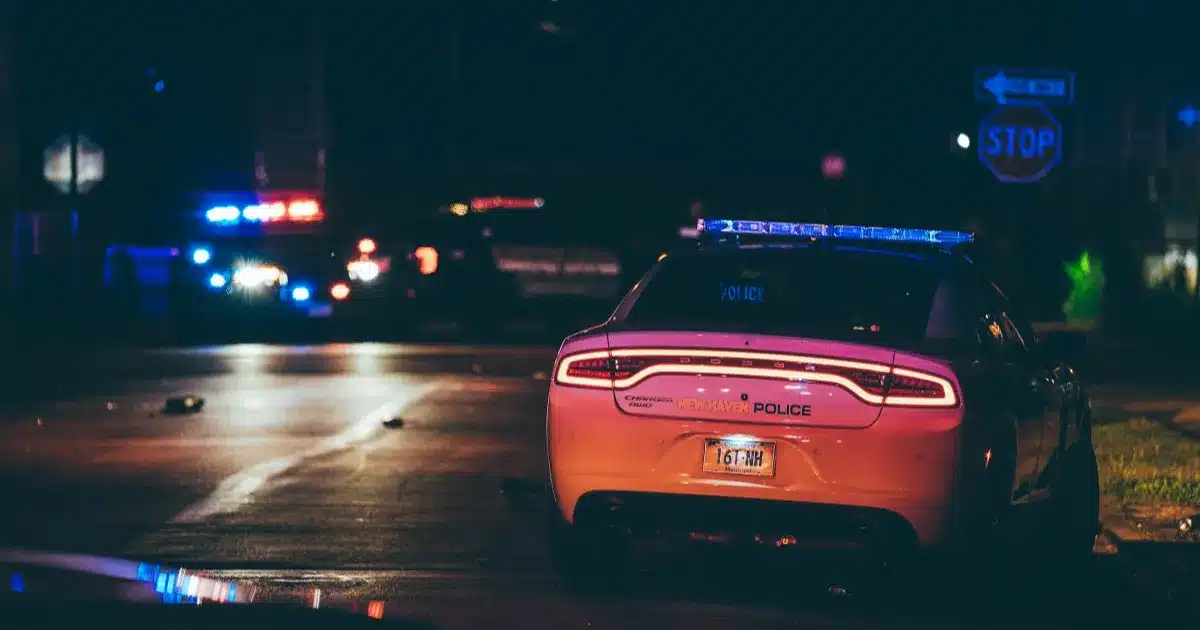
Saying no to a breath test in St. Louis County no longer ends the testing question. Since October 2025, under its St. Louis County no-refusal policy, the Prosecuting Attorney’s Office has asked judges for a search warrant in every DWI case where a driver refuses. With a warrant, police can draw your blood without your consent.
Quick answer: Under the St. Louis County no-refusal policy, if you refuse a breath or blood test after a DWI arrest, prosecutors will seek a judge’s search warrant for your blood. You still face a one-year license revocation for refusing under section 302.574. The refusal can also be used as evidence against you under section 577.041.
What is the St. Louis County no-refusal policy?
Prosecuting Attorney Melissa Price Smith announced the change on Oct. 3, 2025. Before then, the office sought blood warrants mainly in felony cases and crashes. Now it seeks one in any DWI case where the driver refuses a test.
“No refusal” does not mean you have to blow. It means refusing no longer keeps a test result out of the case.
How does a DWI blood warrant work?
A search warrant for blood follows the same rules as any Missouri search warrant under section 542.276:
- The officer writes a sworn application with facts showing probable cause.
- A prosecutor signs the application.
- A judge reviews only what is in writing and decides whether probable cause exists.
- If the judge signs, officers take you to a hospital or other site for a blood draw.
Applications can be sent electronically, so a warrant can come back within an hour or two of the arrest. Our page on search and seizure in Missouri covers the probable cause standard.
Should you still refuse a test in St. Louis County?
That depends on your facts, and it is a hard call to make at the roadside. Refusing has real costs:
- A one-year administrative revocation of your license, separate from the criminal case
- Prosecutors can use the refusal as evidence at trial
- In St. Louis County, a blood result will likely end up in the case anyway
Under Missouri’s implied consent law, you get 20 minutes to try to reach a lawyer before deciding. Use them. Read more about refusing a breathalyzer in Missouri. Field sobriety tests are different: see whether you can refuse a field sobriety test.
How can a lawyer challenge a no-refusal blood warrant?
Problems with the warrant
The warrant is only as good as the officer’s application. A defense lawyer will look for:
- Boilerplate claims that do not match the video
- A stop without reasonable suspicion
- Missing signatures, times or a prosecutor’s approval
- Facts that do not add up to probable cause
If the warrant fails, the blood result can be suppressed.
Problems with the blood draw
Blood evidence also has its own weak points. These include who drew the blood, how long after driving, how the sample was stored and labeled, and how the lab tested it. Delays between the stop and the draw can also matter. See our DWI defense strategies.
What happens to your license after a refusal?
Refusing triggers a one-year revocation by the Department of Revenue. You can ask the circuit court in the county of the arrest to review it. At that hearing, the court decides only three things: whether you were arrested or stopped, whether the officer had reasonable grounds to believe you were driving intoxicated, and whether you refused.
If you win, your license is reinstated. If not, you may qualify for a limited driving privilege with an ignition interlock. Since Aug. 28, 2026, an interlock is required in more cases, including any offense with a BAC of .15 or higher. See license reinstatement for the full process.
Frequently asked questions
What does no-refusal mean in St. Louis County?
Under the St. Louis County no-refusal policy, prosecutors seek a judge’s search warrant for your blood whenever you refuse a DWI test. With the warrant, police can test your blood without consent.
Can police force a blood draw without a warrant in Missouri?
Generally, no. Police need your consent or a warrant, except in rare emergencies. The no-refusal policy is about getting that warrant quickly.
Do I still lose my license if I refuse and they get a warrant?
Yes. The refusal revocation is separate from the blood test. You can lose your license for refusing even if the blood result later helps your case.
Does St. Louis City have a no-refusal policy?
The October 2025 announcement covered St. Louis County. Ask a lawyer what the current practice is in the City and in St. Charles County.
Talk to a lawyer about the St. Louis County no-refusal policy
A blood warrant under the St. Louis County no-refusal policy is not the end of your case. Brian J. Cooke defends DWI cases in Clayton and across St. Louis County, St. Louis City and St. Charles County. See our Clayton DWI lawyer page and what to do after a DWI arrest, call (314) 439-8501, or contact us online.
This post gives general information about Missouri law as of October 2026. It is not legal advice and does not create an attorney-client relationship.
View All Blogs